

Writing Sprints: How Long to Sprint and How Many Words to Aim For
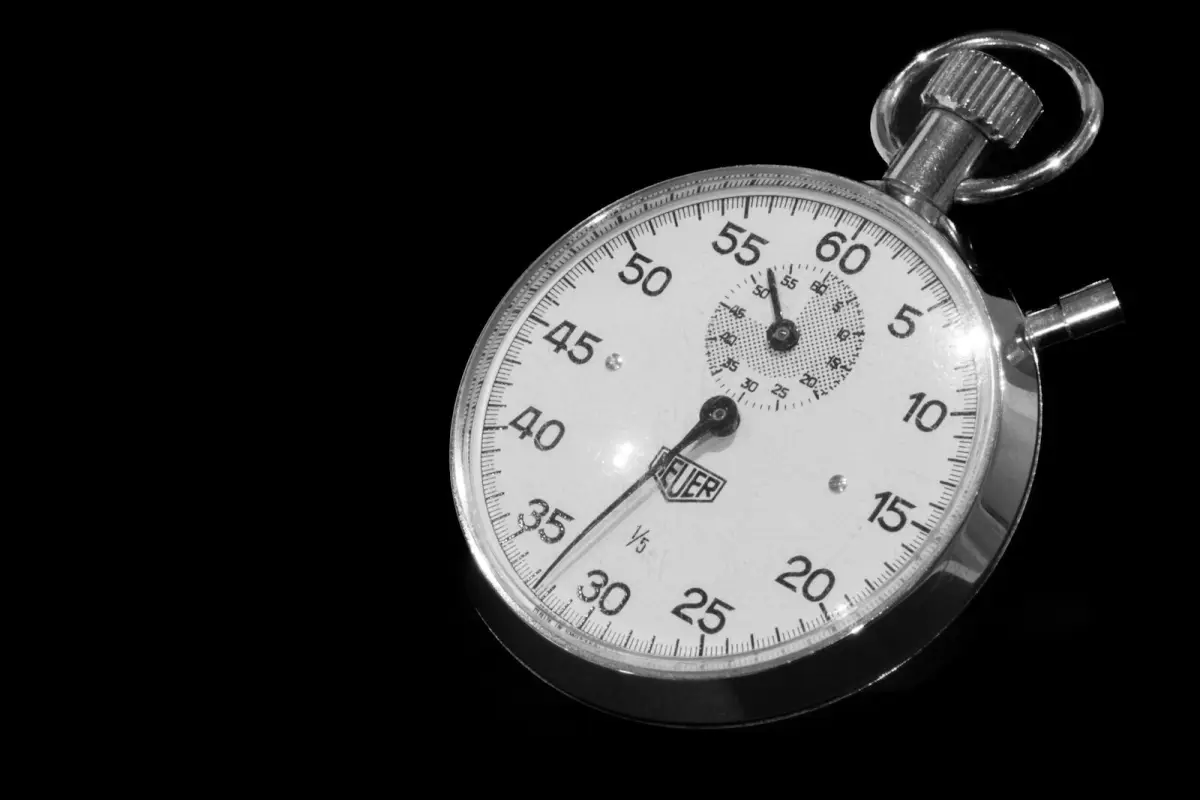
Twenty-five minutes is a sensible length for a writing sprint, and it is where most writers start. You add new words for that long without changing anything, then count what you wrote and take five minutes off. On a day when 25 minutes feels like too much, ten or fifteen will do, and writing groups often sit for a full hour. More important than the length is the word goal you set before the timer starts, and that goal should come from how fast you normally write.
The 25 minutes have a known origin. Francesco Cirillo timed his work with a kitchen timer shaped like a tomato, and his method took its name from the Italian word for it, pomodoro. According to his publisher’s description of the 2018 edition of his book, he came up with the technique as a college student thirty years earlier and divided his work into 25-minute intervals with five-minute breaks in between (Penguin Random House, The Pomodoro Technique). Writers picked up the rhythm later. Cirillo was organising study time, and he had neither novels nor dissertations in mind.
The guides that come up first in a search for writing sprints are less settled. Taken together, the three I read recommend anything from one minute to an hour, and the one on The Write Practice names three minutes as its author’s usual sweet spot. None of the three cites a study. That is why this article relies on three sources they leave out, a large study of typing speed, a single experiment on breaks and Peter Elbow’s description of freewriting from 1973.
One sprint from start to finish
Suppose you are 31,000 words into a novel and you write on weekday evenings after work. An ordinary evening session lasts about an hour and produces around 600 words, with the usual interruptions along the way. Tonight you want to try a sprint instead. Here is how the 25 minutes go, together with the few minutes before and after them.
Before you start the timer, you open the manuscript and find the line where yesterday’s work ended. Under it you type two short notes on what the next stretch has to do, perhaps that the sister arrives and the argument about the house begins. You write down the word count of the file, 31,040, and pick a goal. At 600 words an hour, 25 minutes comes to 250 words, so that is the goal. Notifications go off. If the phone is your timer, it lies face down on the desk, and if you use something else, the phone goes into another room.
Then you write. The first sentence comes out clumsy, and you leave it as it is. Ten minutes in, you need the name of the street the sister lives on and you can’t remember it. Instead of opening a map, you type TK, the placeholder editors use for material still to come, and keep going. The same thing happens twice more, once with a date and once with a detail about her car. Each placeholder takes two seconds, while looking the street up could easily have turned into twenty minutes somewhere else.
When the timer goes off, you finish the sentence you are in and stop. The file now shows 31,322 words, so the sprint produced 282. You note that number with the time and one line on how it went, something like “slow first five minutes, dialogue came easily”. Then you stand up for five minutes and stay away from the draft. Rereading the last paragraph during a break is how editing usually starts.
After the break you search the file for TK and fill all three gaps in one go. If you draft by hand, the count works the same way with pages instead of a file, and How Many Words Is a Handwritten Page? shows how to convert them.
How to set your word goal
Your sprint goal starts from a session you have already finished. Pick an ordinary one where you know both how long it took and how many words came out of it, and scale it down to the length of the sprint. The table does this for 25 minutes.
| Your usual pace | Words per minute | In 25 minutes | First sprint goal |
|---|---|---|---|
| 300 words an hour | 5 | 125 | 125 |
| 600 words an hour | 10 | 250 | 250 |
| 900 words an hour | 15 | 375 | 375 |
| 1,200 words an hour | 20 | 500 | 500 |
The evening in the example sits in the second row, and it ended above the goal. That happens often, because a sprint strips out the small breaks of a normal session, and a first goal you can reach makes the second sprint easier to begin. Once three or four sprints are on paper, you know your own sprint pace and can raise the goal by about a tenth. No study supports that particular step. I suggest it because it moves the bar slowly enough that one bad evening doesn’t feel like a failure.
There is also a hard ceiling, and it sits lower than some of the promises of several thousand words an hour you may have come across. In 2018 a team led by Vivek Dhakal published typing data from 168,960 volunteers who each completed an online test of 15 English sentences (Dhakal et al., CHI 2018). Participants were told to read and memorise each sentence first and then type it as quickly and accurately as they could. They averaged 51.56 words per minute, with a word defined as any five characters. Real English words run to about 5.64 characters once the following space is counted, which turns the average into 45.7 words a minute, or roughly 1,140 in 25 minutes.
That is the speed of copying a sentence you already know by heart. When you compose, you also have to decide what the sentence should say, so a sprint goal should stay far below that figure. I ran the same sum for the German edition of this article and got about 980 words, because German words are longer on average. The gap is a good reminder that word counts from one language say little about another.
Over a whole day, your output depends mainly on how many sprints you fit in. Four sprints of 250 words add up to 1,000 words in roughly two hours, breaks included. Whether that is enough for your project is the subject of How Many Words a Day Should You Write?. If your current work is mostly revising or planning, words may be the wrong thing to count for now, and Words, Hours or Pages? compares the alternatives.
Choosing a length
For drafting, 25 minutes works well because it is long enough for a scene to get going and short enough to start on a tired evening. Sprints of five or ten minutes help on days with little energy, or when all you need is the first paragraph of a new chapter. If you lengthen your sprints, do it five minutes at a time and stop adding once you notice your attention fading towards the end.
Writing groups usually go longer. Shut Up & Write!, which has run free writing meetups since 2007, builds its sessions around a full hour of writing. Its guide for organisers puts five to ten minutes of introductions before that hour and a five- to ten-minute check-in after it, so a session lasts roughly 70 to 80 minutes (Shut Up & Write!, Hosting Events).
| Sprint length | Good for | Watch out for |
|---|---|---|
| 5 to 10 minutes | getting started, freewriting, a day with little energy | too short to finish a scene |
| 15 to 25 minutes | most drafting, one scene or section at a time | stopping just as a scene takes off |
| 45 to 60 minutes | group sessions, writers who already sprint regularly | fatigue in the last quarter |
What happened when students took fixed breaks
Whether a fixed rhythm helps at all has been tested, though not on writers. Felix Biwer and colleagues at Maastricht University followed 87 bachelor’s and master’s students through one day of their own study and split them into three groups (Biwer et al., British Journal of Educational Psychology, 2023). Thirty-five of them took breaks whenever they liked. Twenty-five took six minutes off after every 24 minutes of study, a version of the Pomodoro rhythm that fills the same half hour as Cirillo’s 25 plus five. The remaining 27 took three minutes off after every twelve.
The students who chose their own breaks studied in longer stretches and also took longer breaks. They reported more fatigue and distraction, and less concentration and motivation, than both fixed groups. How much work the groups got through, and how much mental effort they said it cost them, did not differ. The authors conclude that fixed breaks had mood benefits and appeared to be more efficient, since the fixed groups completed a similar amount in less time.
I would read that cautiously as a writer. A single day, 87 students, and studying rather than drafting make a narrow base. The study does not show that sprints produce more words per hour. What it does suggest is that a fixed rhythm makes the work easier to sustain, and that matters most on the second and third evening of a project, when the novelty has worn off. I found no retraction or correction notice for the paper.
Where the rule against editing comes from
The habit of leaving every sentence alone until the timer stops goes back to freewriting. In Writing Without Teachers, published in 1973, Peter Elbow describes it as writing for ten minutes at least three times a week without stopping for anything. You never look back, never cross anything out and never pause to wonder how a word is spelled. If nothing comes, he suggests writing that you can’t think what to say, or repeating the last word you wrote. The only requirement, as he puts it, is that you never stop (Elbow, Freewriting, excerpt from Writing Without Teachers).
Elbow wanted people to think on paper, and very short sprints of a few minutes are often exactly that. A drafting sprint borrows a single part of his exercise, the agreement that your inner editor waits until the time is up. For long projects that part is worth a great deal. A writer who polishes every sentence as it appears can spend 25 minutes on three versions of one paragraph and finish the evening where it began.
The rule comes with a cost you should plan for. A sprint produces rough draft, and rough draft needs its own revision pass later. Give that pass its own time on another day instead of squeezing it into the sprint.
Sprinting with other people
Most writers who like sprints string several together, with a five-minute break after each one. Doing that in company adds a second motive, because someone expects you to turn up. At a Shut Up & Write! session everyone names a small, concrete goal at the start and says at the end how it went. Online groups also run word wars, in which several people sprint at the same time and post their word counts afterwards. That can be a spur, though it makes a poor comparison. A scene full of dialogue fills up far faster than a chapter that depends on research, so two people’s totals say little about each other. Measure each sprint against your own last one.
If you sprint with a partner regularly, fix a time each week. A shared sprint is also a good way to make the first day after a missed stretch feel different from an ordinary one, and Writing Streaks: When They Help and When They Hurt explains why that helps.
When a sprint is the wrong tool
Sprints are built for new text. During revision the word count often goes down, so it tells you little about progress. A timed block can still help with editing as long as you drop the word goal. Research and outlining are similar. If you don’t yet know what the next chapter has to do, a sprint mostly produces pages you will later cut.
Sometimes the timer goes off just as a scene starts to move. In that case, keep going. The Maastricht students who set their own breaks did work in longer stretches, and what it cost them was more fatigue and distraction. An occasional long sprint does no harm, but it shouldn’t become your default.
Sprints are also a weak fix for a large backlog. Eight sprints in one day to make up for a lost week amount to one long session with short pauses. Why catch-up days rarely hold, and how to rework a plan that has slipped, is the subject of Behind on Your Dissertation? How to Rework the Plan. For a thesis or dissertation, How Many Words a Day Does a Dissertation Need? turns your deadline into a daily target that you can split into sprints.
Is a writing sprint the same as the Pomodoro Technique?
The two overlap. The Pomodoro Technique is a general method for any kind of work, built on 25-minute blocks and five-minute breaks. A writing sprint borrows the timer and adds two things that belong to drafting, a word goal set in advance and the rule not to edit until the time is up.
How long should my first writing sprint be?
If 25 minutes sounds like a lot, start with 10 or 15. What matters is that you get through the first sprint without stopping. After that, add five minutes at a time until you notice your concentration dropping towards the end.
What is a word war?
A word war is a sprint run by several writers at once, usually online, after which everyone posts their word count. Some groups crown whoever wrote the most. It works best as company rather than a contest, because word counts from different projects don’t compare well.
Do deleted words count in a sprint?
Your sprint total is the difference between the word count at the end and the count at the start. If you stick to the rule of not editing during the sprint, very little gets deleted anyway. If you do cut a large passage, note it separately so that your sprint figures stay comparable.
Should I listen to music while I sprint?
I found no solid research on music during writing sprints specifically. Some writers use a playlist of a set length as their timer. If lyrics pull your attention away from your own sentences, try instrumental music or silence.